Hi, my name is Gabrielle and I have been studying Natural Science for two years at St-Jérôme College. My glossary can be useful for the students already studying Natural Science and for the students who will study Natural Science. In fact, my glossary contains twenty field-related terms and their definitions. These terms are frequently used in chemistry, in biology and in physics. In addition, each term in this glossary has an audio file to show how to pronounce it, the translation in French, a sentence demonstrating how to use the word and a picture of the term. Furthermore, these words have been chosen to help students studying Natural Science with the meaning of difficult words. By using this glossary, you can also learn new words and get a wide scientific vocabulary.
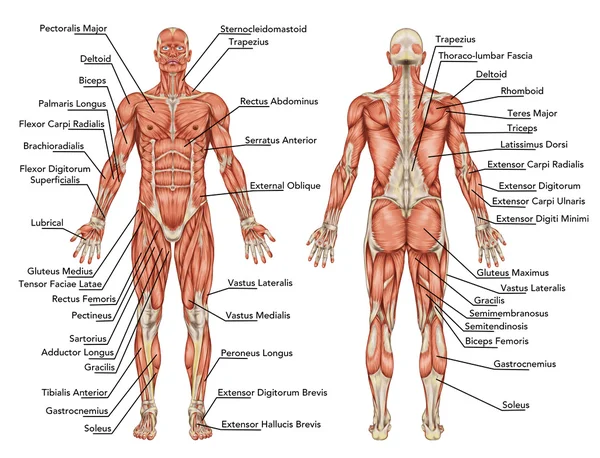
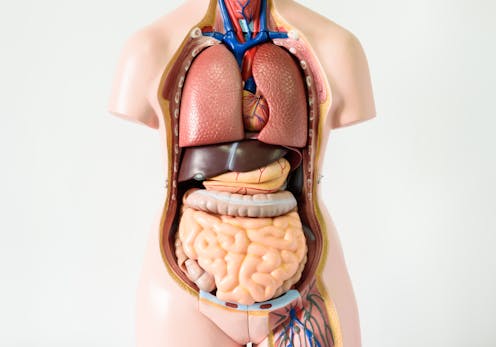
anatomy
noun
The branch of science concerned with the bodily structure of humans, animals, and other living organisms, especially as revealed by dissection and the separation of parts.
Example: Of the offspring that do survive, on average, they are more likely to have an ANATOMY, physiology or behaviour that better prepares them for the demands of their environment.
fr: anatomie
atom
noun
The basic unit of a chemical element.
Example: A normal ATOM exists with paired electrons orbiting around its central nucleus, while each pair moves in its own region of space.
fr: atome
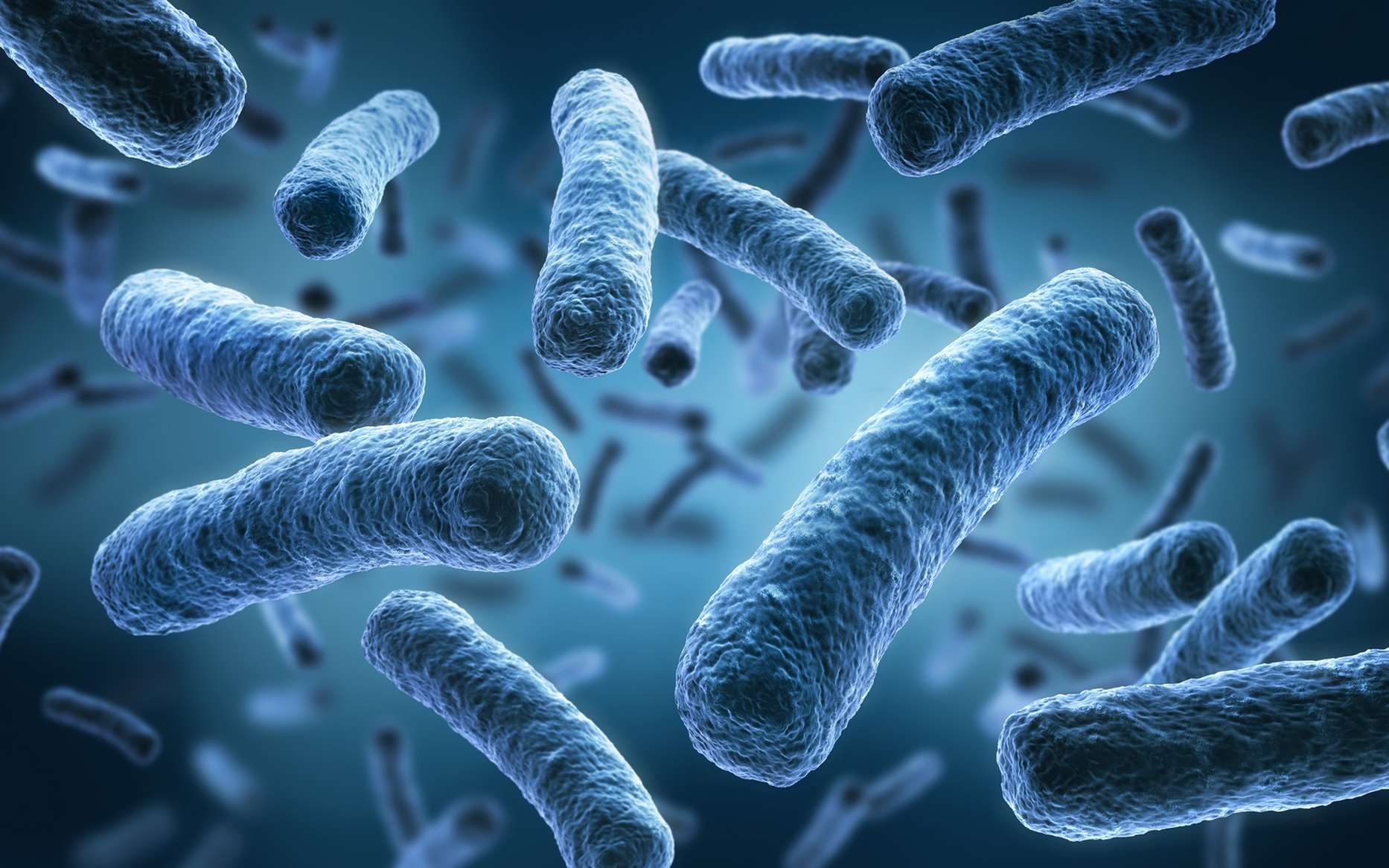
bacterium
noun
A member of a large group of unicellular microorganisms which have cell walls but lack organelles and an organized nucleus, including some which can cause disease.
Example: The subject of Biology covers everything from the smallest BACTERIUM through to Gaia in her entirety.
fr: bactérie
cell
noun
The smallest structural and functional unit of an organism, typically microscopic and consisting of cytoplasm and a nucleus enclosed in a membrane. Microscopic organisms typically consist of a single cell, which is either eukaryotic or prokaryotic.
Example: This process is a complex series of conversions carried out by enzymes within a yeast CELL.
fr: cellule
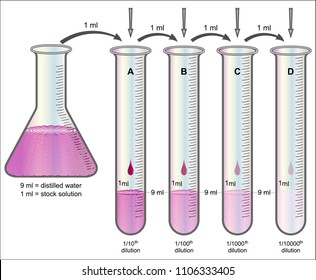
dilution
noun
The action of making a liquid more dilute.
Example: This was done using developer of DILUTION 1:10 with water for roughly one minute, agitated, and the fixer of DILUTION 1:3 for roughly 6 minutes.
fr: dilution
dissection
noun
The action of dissecting a body or plant to study its internal parts.
Example: This is a point-of-care test for coagulation currently in use in cardiothoracic surgery and intensive care in the hospital in which I work, and which is increasingly being asked for by anesthetists during other types of surgery, such as aortic aneurysm repair, radical neck DISSECTION with insertion of free flap and other surgery with the potential for large blood losses or homeostatic disturbance.
fr: dissection
electricity
noun
A form of energy resulting from the existence of charged particles (such as electrons or protons), either statically as an accumulation of charge or dynamically as a current.
Example: The reason that the cells communicate via a chemical messenger rather than an electrical charge is because ELECTRICITY would be unsafe - 3000 cells fire in the body every second, if these were electrical charges we would explode!
fr: électricité
electron
noun
A stable subatomic particle with a charge of negative electricity, found in all atoms and acting as the primary carrier of electricity in solids.
Example: They are molecules with an odd number of electrons which are highly reactive as they seek to pair up with another free ELECTRON.
fr: électron
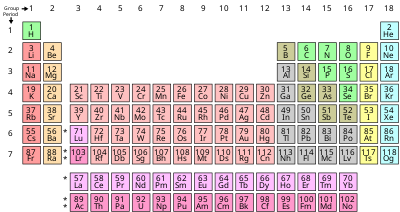
element
noun
Each of more than one hundred substances that cannot be chemically interconverted or broken down into simpler substances and are primary constituents of matter. Each element is distinguished by its atomic number, i.e. the number of protons in the nuclei of its atoms.
Example: An atom is defined as 'the smallest unit of a chemical ELEMENT that can exist'.
fr: élément
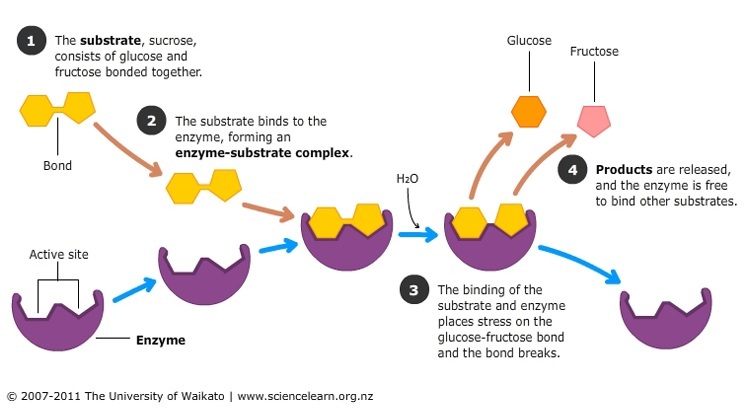
enzyme
noun
A substance produced by a living organism which acts as a catalyst to bring about a specific biochemical reaction.
Example: Mitochondria also contain this ENZYME which is, again, highly homologous to the bacterial equivalent, however, in mitochondria, it is encoded by nuclear DNA and then must be moved to the mitochondria as previously discussed.
fr: enzyme
evaporation
noun
The process of turning from liquid into vapor.
Example: For improvement, ideally is to have the scale placed beneath the beaker while water emerging, thus will be able to record the immediate water mass with minimum loss through EVAPORATION.
fr: évaporation
gravity
noun
The force that attracts a body toward the center of the earth, or toward any other physical body having mass.
Example: The speed of the falling drop increases until the air resistance equals the force of GRAVITY and the drop falls at a constant speed called its terminal velocity.
fr: gravité
magnetism
noun
A physical phenomenon produced by the motion of electric charge, resulting in attractive and repulsive forces between objects.
Example: The reduction of electricity and MAGNETISM to one force governed by a few equations in Maxwell's theory of electromagnetism is in stark contrast to the many variables and interpretations required in astrology to predict aspects of human behaviour.
fr: magnétisme
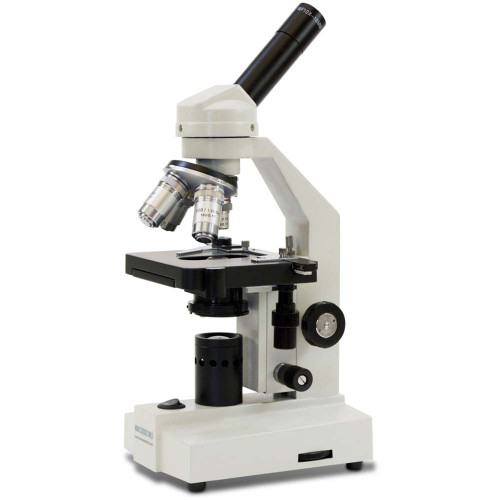
microscope
noun
An optical instrument used for viewing very small objects, such as mineral samples or animal or plant cells, typically magnified several hundred times.
Example: They are large enough to be seen under a light MICROSCOPE, but a detailed examination can only be carried out using an electron MICROSCOPE.
fr: microscope
molecule
noun
A group of atoms bonded together, representing the smallest fundamental unit of a chemical compound that can take part in a chemical reaction.
Example: These reactions generate an estimated 28 additional ATP molecules per glucose MOLECULE, outstripping the yield of anaerobic ATP by far.
fr: molécule
organ
noun
A part of an organism that is typically self-contained and has a specific vital function, such as the heart or liver in humans.
Example: In the dog, microbial digestion of cellulose occurs in the colon, an ORGAN that is mainly involved with the regulation of the absorption of water from the chime into faeces.
fr: organe
photosynthesis
noun
The process by which green plants and some other organisms use sunlight to synthesize foods from carbon dioxide and water. Photosynthesis in plants generally involves the green pigment chlorophyll and generates oxygen as a byproduct.
Example: Mammals have the regulation of body temperature from homeostasis, and plants regulate the conversion of carbon dioxide into oxygen via PHOTOSYNTHESIS.
fr: photosynthèse
pressure
noun
Continuous physical force exerted on or against an object by something in contact with it.
Example: In LC the sample travels in the MP as a liquid, the MP is forced through the column as otherwise the flow rate would be too slow and this is why this technique is usually known as high PRESSURE liquid chromatography (HPLC).
fr: pression
proton
noun
A stable subatomic particle occurring in all atomic nuclei, with a positive electric charge equal in magnitude to that of an electron, but of opposite sign.
Example: Antioxidants can prevent oxidation by firstly minimizing free radical's formation; secondly scavenging free radicals mainly through donating their own electron(s) and PROTON(s) to free radicals to equate the unpaired electrons, while forming a stable molecule or compound.
fr: proton
wave
noun
A periodic disturbance of the particles of a substance which may be propagated without net movement of the particles, such as in the passage of undulating motion, heat, or sound.
Example: As the absorbance was being taken at a WAVE length of 750 nm one would have expected both the samples and standards to share similar properties with respect to colour.